


What makes party jollof different (and why most restaurants can’t make it)
The jollof rice you eat at a Lagos owambe doesn’t taste like jollof at home, and almost nobody can explain in plain terms what’s actually different. People will argue about it and drive across town for it, but if you ask them to point at the actual difference (the technique, the ingredient, the timing), most of them go quiet.
The honest answer is that two different cooking methods share the same name. The thing your aunt brought to the last wedding and the thing on your stove on a Tuesday evening are cousins, not the same dish. Once you understand where they part ways, the question of why you’d ever pay for jollof when you can cook it at home answers itself.
Two methods, one name
Gas-stove jollof is what runs in most homes. You make a tomato base, parboil the rice or add it raw, stir, cover, let it steam, and after about forty minutes you’ve got a perfectly reasonable plate of jollof. Plenty of Lagos eats it every day, and there’s no shame in it at all.
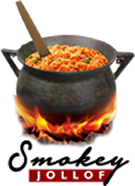
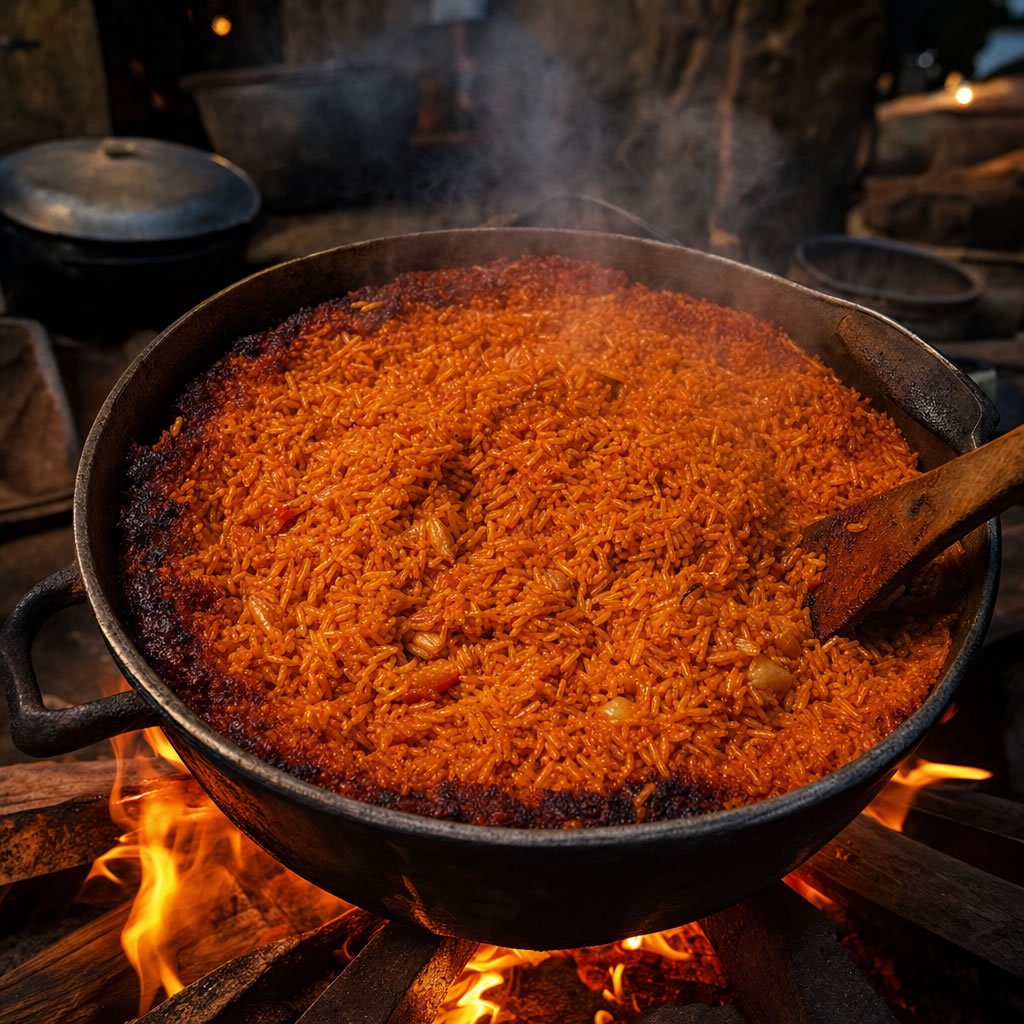
Party jollof is a different operation altogether. The cooking happens over firewood or charcoal, in a pot that’s wider than it is deep, and the rice at the bottom of that pot is meant to char. There’s a real difference between charring rice and burning it; the first is what gives party jollof its flavour, the second is just a wasted pot. That thin, deliberately scorched layer at the base is where the smoky, slightly bitter, slightly toasted note comes from. Stirred through the rest of the pot at the end, that flavour is what people are really tasting when they say “this jollof is sweet, abeg, where did you order it from.”
The technical name in older Yoruba kitchens is “smokey” jollof, and the phrase is doing real work. The smoke is the point. Some places call it “iron pot” jollof, others “burnt bottom,” but every version of the name is pointing at the same thing: the dish is defined by what happens to the rice that touches the metal.
Why home cooks can’t easily replicate it
Three things stand in the way, and they tend to be invisible until somebody actually tries to recreate the dish in a normal kitchen.
Heat is the first obstacle. A standard gas burner doesn’t get hot enough at the floor of the pot to char rice cleanly without overcooking the layers above. By the time the bottom starts to take on real colour, the top half has gone soft. Firewood and charcoal handle this differently because the heat is broader and more sustained, and the flame doesn’t dip every time you lift the lid to check on what’s happening.
Then there’s the pot itself, which needs to be wide and shallow so the rice spreads in a thin layer rather than piling up. A normal cooking pot is too tall, which means the bottom layer is the only part that ever touches the metal, and you can’t get an even char distribution if the pot is shaped wrong. The right shape (a wide cast-iron or aluminium party pot) isn’t sold in most kitchen shops in Lagos. Caterers have them. Home cooks usually don’t, which is the quiet reason home jollof and party jollof never quite line up even when the cook knows what they’re doing.
Patience comes last, and it’s the one nobody talks about. The char window is short. You’re not stirring during the final phase; you’re letting the rice catch, listening for the right sound, smelling for the right note. Pull the pot off too early and the smoke flavour isn’t there. Leave it ten minutes too long and the whole bottom turns to coal. First-time cooks tend to walk away during this exact window because the food “looks done,” and that’s how a perfectly seasoned pot ends up in the bin.
Why most restaurants don’t try
Restaurants run on gas. The kitchen is built for fast turnover, predictable timing, and a food-cost number that works on a spreadsheet. Firewood ruins all three.
To cook party jollof at any kind of volume, you need a separate cooking area outside the main kitchen, a person whose only job is to manage the fire and the wood supply, a rotation of pots (you can’t keep using the same one indefinitely or the char compounds in a bad way), and the willingness to throw out the occasional batch when the timing slips. None of that fits cleanly into a regular restaurant operation, and the maths usually pushes the kitchen in the other direction.
So most places make the calculation and put a gas-stove version on the menu instead. It’s faster, cheaper, easier to staff, and the diner who’s never had real party jollof won’t know what they’re missing. From the restaurant’s side, it’s a sensible decision. From the customer’s side, it’s a quiet downgrade nobody mentioned at the door.
What our kitchen does
We run a separate firewood setup specifically for jollof, with someone on it full-time and the right pot shape for the volume we cook. We throw out the occasional batch when the timing goes off, and we don’t put a gas-stove version on the menu because we didn’t want to be one more restaurant doing the cousin and calling it the dish.
If you’ve never had real party jollof before, three signals will tell you you’re eating it. The colour is the first one, a deeper and slightly orange-brown shade rather than the brighter red of stove-top jollof. The smell carries before the plate reaches you, which is the second; you’ll usually know what’s coming before the rider hands it over. The third is the bits of darker rice you’ll find at the bottom of your plate after you finish, which is the burnt-bottom layer redistributed through the pot. Some people fight over those bits. We won’t be offended if you do.
You can try it in the Smokey Jollof Rice Bowl if you’re eating solo, the Smokey Jollof Rice Pack if you’re feeding a few people, or the Asun Jollof Rice Bowl if you want the smokey jollof paired with our peppered goat meat in one plate.
We’re at 11A Oguntona Crescent, Pedro, off Gbagada Expressway, open Monday to Friday from 7am to 3pm and Saturday and Sunday from 8am to 3pm. If you’ve had party jollof somewhere else and want to compare, place a small order from us and judge for yourself, because the dish is the kind of thing that’s much easier to settle by tasting than by reading.