

How I decide what goes on the Smokey Jollof menu, by Ibukun
I’m Ibukun. I started Smokey Jollof, and I still oversee what comes out of the kitchen. People ask me sometimes how the menu gets decided: what makes it on, what gets cut, what’s coming next. The honest answer is longer than most people expect, but it’s worth writing down properly because I think how a kitchen makes its menu tells you something about how it’ll cook the food.
This is the long version of the answer.
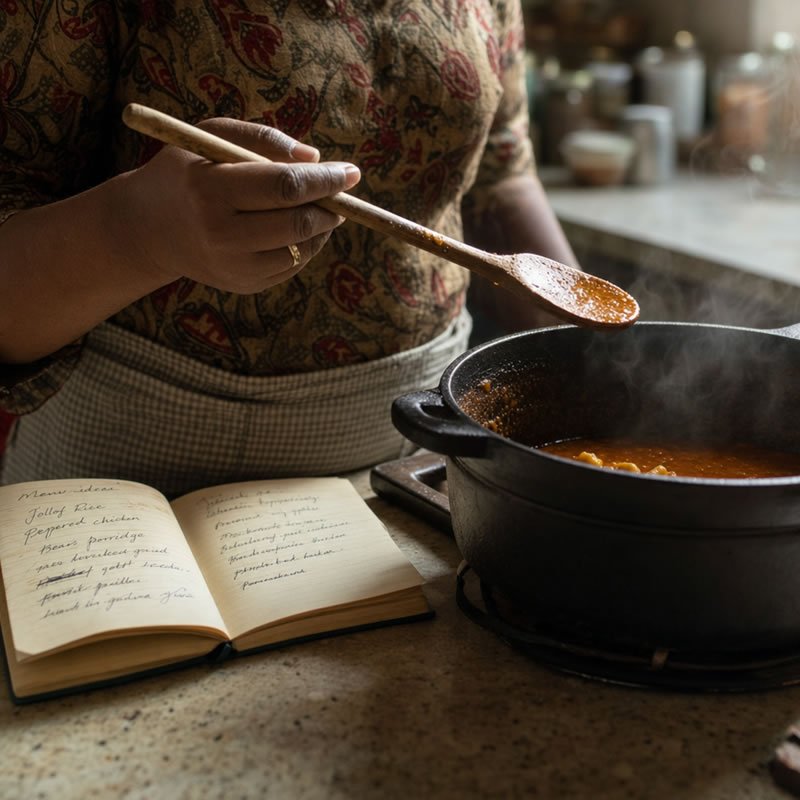
The first test: I cook it for my family
Every dish on our menu has been to my house. Before anything goes on the order page, I cook it at home for my husband, my kids, and whoever else happens to be around for dinner that night. If they ask for it again the following week, the dish has earned a second look. If they nod politely and don’t ask twice, it doesn’t make it onto the menu.
That sounds like a low bar, and it isn’t. People will eat almost anything once if it’s set in front of them at a polite dinner. The actual signal is whether someone goes out of their way to ask for the same thing a few weeks later, when the novelty has worn off and the dish has to stand on its own without the warmth of a first impression doing the work for it. If I can’t get a regular meal-eater in my own home to want a plate of something a second time, the customer who has fifty other restaurants to choose from isn’t going to come back for it either.
The Smokey Jollof Rice Bowl cleared this test years ago, and it’s still the dish I’d defend to anyone who asks. The basmati fried rice, the ofada with assorted meat, and the asun all followed, and those four are the spine of the menu. They’re also the dishes I’d hand to a guest if you asked me where to start.
The dishes that took more than one try
The Basmati Fried Rice Bowl took six attempts before I was happy with it. Salt was the issue with the first version, and I noticed only because the kids stopped eating it halfway through, which is a kind of feedback I take seriously. The second version went too far in the other direction with the vegetable mix; we were using carrot pieces that were too large for the texture of the rice. By the third, the rice was right but the chicken wasn’t seasoned the way I wanted, and that bothered me more than it should have. We got closer on the fourth and fifth attempts, and the sixth was the one we shipped. It hasn’t really changed since.
The Ofada Rice and Sauce Bowl took even longer to get right, because ayamase sauce is one of those dishes where every Yoruba woman thinks her version is the correct one and everyone else’s is wrong. I went through three different recipes (one from my mother, one from a friend’s grandmother, one I worked out myself) before settling on a base that worked at scale. Even now, the sauce still gets adjusted depending on what tomatoes we get that week, because tomatoes in Lagos in May are not the same as tomatoes in Lagos in October, and pretending otherwise is how you end up with an inconsistent kitchen and customers who notice.
The smokey jollof was different from those two. We had the cooking method from the start because I’d grown up watching it cooked at owambes, and the principles weren’t really in question. The work was less about getting the flavour right and more about figuring out how to do it consistently for a kitchen that serves dozens of orders a day, instead of for one large pot at a party once a month.
What didn’t make it past testing
We tried a coconut rice for about two months. The flavour was decent and the kids ate it more than once, which usually counts in a dish’s favour. The problem was the texture going wrong by the time delivery reached the customer; coconut rice gets soggy faster than the other rice dishes, and the people who care about coconut rice tend to care a lot about how it lands on the plate. I’d rather not serve it at all than serve it badly, so we pulled it.
We also tried a goat-meat pepper soup. The version we made was good, and on a different day I’d have put it on the menu. The kitchen workflow couldn’t support it without slowing everything else down, because stews on a separate burner mean the jollof timing gets disrupted, and we couldn’t afford that on the volume we cook. Maybe one day, when we have the kitchen layout for it.
A few attempts at pasta dishes never made it past the first cook. We’re not a pasta restaurant, and trying to be one would have meant taking attention away from the things we already do well. The menu is narrow on purpose, and I’d rather keep it that way than spread it thin to chase variety we can’t back up.
What we’re testing right now
I won’t name them because they might not make it. What I will say is that there’s one rice dish I’m cautiously excited about, and one side that I’d describe as “the version of suya we’d be proud of.” Both have passed the family test, but the kitchen workflow needs more work before either is ready for the order page.
If they make it, they’ll show up there one day and you’ll see them in the menu without much fanfare. If they don’t, you won’t hear about them again, and that’s also fine. A menu shouldn’t expand just because the kitchen is busy; it should only expand when the kitchen can stay busy without dropping the things it already does well.
What I’d ask from you
If there’s a dish you wish we made, or one you’ve eaten somewhere else that you think would be at home on our menu, you can send a message on WhatsApp or write to us at service@smokeyjollof.com. I read every reply that comes in. Not every suggestion will work for the kitchen we have, and some of them will be ideas I’ve already tried and ruled out, but the ones that do work tend to come from customers rather than from me sitting at a desk. The Asun Bowl on the menu started because a customer asked about it three years ago, and that’s the kind of pattern I want more of.
The kitchen is small and the menu stays narrow on purpose, but the door is open if there’s something you want, and the easier you make it for me to imagine cooking your suggestion in my own kitchen first, the better the chance it ends up on the order page.
Ibukun
Founder, Smokey Jollof